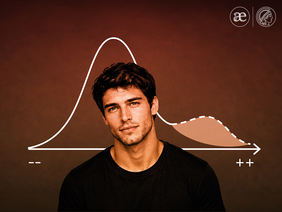
“The average tells only part of the story,” says sole author Eugen Wassiliwizky of the MPIEA. “Although male faces receive lower attractiveness ratings overall, we find a disproportionate group of exceptionally attractive men. Male beauty certainly exists, but it may be distributed differently.”
This observation also offers a possible perspective on an apparent cultural paradox: Male beauty has been celebrated for millennia, from classical sculpture to contemporary popular culture. Such representations may disproportionately draw from the exceptional end of the attractiveness distribution.
But the GAP raises an even more fundamental issue: Researchers use ratings of facial attractiveness as indicators of partner preferences, sexual attraction, or so-called “mate value”—that is, a person’s perceived desirability as a potential partner. Yet the GAP is not restricted to evaluations of potential partners. In fact, it is particularly pronounced when heterosexual women rate female faces.
“For decades, researchers have asked people how attractive they find a face, often interpreting the answer in terms of mate preference,” Wassiliwizky explains. “But the GAP forces us to ask a more basic question: What are people actually judging when they answer this question?”
The new research article argues that attractiveness ratings may reflect a broader system of aesthetic evaluation rather than sexual desire alone. This perspective could change how attractiveness is studied in the future. Researchers interested specifically in sexual attraction might employ more direct measures, while same-sex evaluations could provide valuable insights into how people generally perceive and evaluate beauty.
Publication:
Wassiliwizky, E. (2026). What Are We Measuring When We Measure Attractiveness? Current Opinion in Psychology, 73, 102416. https://doi.org/10.1016/j.copsyc.2026.102416
Contact:
Source: Max Planck Institute for Empirical Aesthetics
Original article: https://www.aesthetics.mpg.de/en/newsroom/news/news-article/article/the-perception-of-male-beauty.html
 Max Planck Institute for Empirical Aesthetics